








Countries:

global pay

Employer of Record Services India

Employer of Record Services in India: How Innothrive Global Payroll Can Help Your Business Expanding your business in India can be complex, especially when navigating local employment laws, payroll management, and HR compliance. This is where Employer of Record services in India play a crucial role. By partnering with a reliable EOR company in India, businesses can hire employees quickly without establishing a legal entity, ensuring compliance with all regulations while reducing administrative burdens. Innothrive Global Payroll is a leading provider of EOR services in India, helping companies streamline their HR processes, manage payroll efficiently, and hire the right talent without the usual legal or logistical hassles. In this blog, we will explore the importance of EOR services, the benefits of working with an experienced EOR service provider, and why Innothrive Global Payroll is the trusted partner for businesses looking to succeed in India. What Are Employer of Record (EOR) Services? Employer of Record (EOR) services is a solution that allows businesses to hire employees in a country without setting up a local legal entity. The EOR becomes the legal employer of the workforce while the client company maintains full control over the employee’s day-to-day work. In India, an EOR handles payroll processing, compliance with labor laws, tax deductions, employee benefits, and statutory obligations. This ensures businesses remain fully compliant while saving time and avoiding legal risks. By leveraging EOR services in India, companies can focus on growth, strategy, and operations rather than administrative and legal challenges. Expand your India business easily with Innothrive EOR services today! Call Now Why Businesses Choose EOR Services in India India has a complex regulatory environment, with multiple labor laws, tax compliance requirements, and payroll regulations. EOR services simplify this process. Here’s why businesses increasingly prefer EOR solutions: Simplified Payroll Management EOR service providers manage all payroll activities, including calculating salaries, deductions, tax filing, and statutory benefits. This ensures employees are paid accurately and on time, while businesses avoid errors and penalties. Compliance with Indian Labour Laws EOR companies in India stay updated with all local employment laws. This includes labor contracts, social security contributions, provident fund compliance, and tax regulations. Businesses can hire legally without worrying about potential non-compliance issues. Faster Hiring and On-boarding Hiring employees in India through an EOR eliminates the need for establishing a legal entity, which can take months. Companies can quickly onboard talent and scale operations across cities without delay. Key Benefits of Working with an EOR Company in India Partnering with a trusted EOR company in India offers multiple advantages: Reduced Administrative Burden EOR services take over administrative tasks like payroll, HR management, and statutory compliance. This allows companies to focus on business growth while employees enjoy a seamless experience. Risk Mitigation and Legal Support Employment laws in India are strict, and non-compliance can lead to fines or litigation. EOR providers ensure legal compliance, reducing risk for businesses expanding in India. Cost-Effective Global Expansion Setting up a local entity requires investment in legal, HR, and operational infrastructure. Using an EOR company reduces upfront costs and operational overhead, making international expansion more cost-efficient. How to Select the Best EOR Service Providers in India Choosing the right EOR is critical for smooth operations. Here are key factors to consider: Experience and Expertise Look for EOR service providers with proven experience in Indian labor laws and global HR management. Experienced providers can handle complex payroll and compliance challenges. Technology and Reporting Tools Top EOR companies provide advanced HR software, online dashboards, and reporting tools that allow clients to track payroll, employee performance, and compliance metrics efficiently. Customer Support and Customized Solutions Every business has unique requirements. EOR providers offering tailored solutions, dedicated account managers, and responsive support ensure a smooth working relationship. Why Choose Innothrive Global Payroll as Your EOR Partner When it comes to reliable EOR service providers in India, Innothrive Global Payroll stands out. Trusted and Experienced EOR Company in India With years of experience managing payroll and compliance for international clients, Innothrive Global Payroll ensures legal and operational efficiency for businesses of all sizes. Comprehensive Payroll and HR Solutions Innothrive offers end-to-end payroll services, HR management, employee on-boarding, and statutory compliance. Businesses can scale effortlessly while employees receive timely, accurate pay and benefits. Compliance and Risk Management Expertise India’s regulatory landscape is complex. Innothrive’s expert team stays updated with labor laws and tax regulations, helping companies mitigate risk and remain fully compliant. Conclusion Expanding your business in India is easier with Employer of Record services. By partnering with Innothrive Global Payroll, you gain a trusted EOR company in India that ensures compliance, streamlines payroll, and provides HR support. Hire and manage employees in India seamlessly with our EOR solutions! Contact Us Today FAQs What is an Employer of Record? An EOR is a service provider that becomes the legal employer of your workforce while you manage daily operations. Why should I hire an EOR company in India? To ensure compliance with labor laws, reduce administrative burden, and hire employees without a local legal entity. How do EOR services help with payroll? EOR providers handle payroll, tax filings, benefits, and statutory compliance, ensuring employees are paid accurately and on time. Can EOR services help scale my business in India? Yes, EOR services allow businesses to hire and manage talent across India quickly, enabling faster expansion.

Employer of Record Services India Read More »

Payroll Outsourcing Companies India

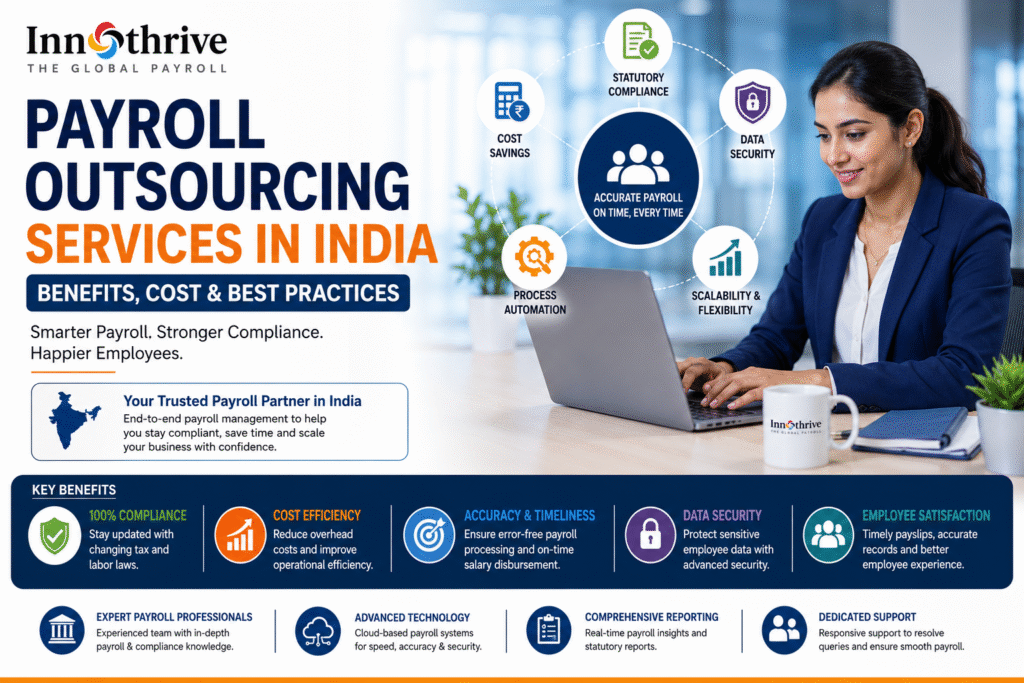
Payroll Outsourcing Companies in India: Pros, Cons & How to Choose the Right Partner Spreading business across borders brings endless opportunities but also tons of challenges related to payroll management, financial and administrative duties. Payroll management is one of the most crucial and tough operations for many businesses. It includes complex calculations of salaries or wages, handling tax deductions, benefits, and timely and accurate payments to employees. To ensure accuracy, businesses hire payroll outsourcing companies in India. In this guide we’ll walk you through payroll outsourcing: how it works, what services should be included, the benefits and challenges. What Is Payroll Outsourcing? Payroll outsourcing is an practice where you hand your company’s payroll responsibilities to third party payroll experts, rather than managing everything on your own. For global businesses, this is like partnering with a dedicated payroll provider who is going to take care of everything whether it’s calculating employee wages and deductions to ensure the compliance with local tax laws and labour regulations across different countries. This allows a company to reduce its administrative burden, ensure less errors, and stay adaptable. From our years of experience with international organizations, we can say that payroll outsourcing not only limits to the simply handling paperwork. It’s a comprehensive service where experts manage every single thing related to payroll- complex calculations, taxes, compliance with local laws, reporting, and securing data handling. If you want to explore more common challenges that organizations usually face and how we solve them, visit our detailed guide on Payroll Challenges and Solutions, Why Global Businesses Choose Us, And Advantages You’ll Get. What Services Do Payroll Outsourcing Firms in India Provide When you partner with one of the leading payroll management companies in India, you can get specialized services made to make your administrative tasks easier, more accurate, and fully docile regardless of the country, city, or location your employees work from. Here’s detailed look at the key services provided by the top payroll processing companies in India. Payroll Computation & Processing This operation includes precise calculation of employee salaries, wages, bonuses, overtime, deductions, and net pay, ensuring everyone is paid correctly and on time. Tax Compliance & Filing Support Handling all the complex TDS calculations, PT, PF, ESI deductions, and ensuring timely statutory filings. Employee Benefits & Reimbursements Management Managing employee benefits like insurance, retirement benefits, paid time off, and integrating these flawlessly into the payroll process. Salary Disbursement & Direct Deposit Services Ensuring salary transfer through secure banking integrations and handling multiple currencies for global teams. Employee Self-Service Platforms Giving online access to employees for viewing pay slips, download tax documents, updating personal details, and managing leave requests-reducing HR workload and improving transparency. Time, Attendance & Leave Tracking Integrating swipe cards, or digital attendance systems to capture accurate time, attendance, and leave data. Payroll always reflects real-time attendance, reducing administrative workload. On-boarding and Exit Management Assistance Make the process of adding new hires to payroll, and managing exits easier and ensuring that all the compliance paperwork is handled smoothly. Custom Reporting & Analytics Generating detailed reports on payroll expenses, tax liabilities, overtime, employee costs, attendance trends, and more. This can help senior leaders to make data-driven decisions and plan budgets more effectively. End-to-End Compliance Management Proactively monitoring and adapting to changes in labour laws, statutory requirements, and tax regulations to keep your business compliant. While these services are covering the essentials of payroll services, many global businesses benefit from going a step further. Complete solutions like Global Employee of Records (EOR) and Professional Employer Organization (PEO) can simplify the entire spectrum of HR, compliance, and employee records management. If you’re not aware about how EOR services can be beneficial for your organization, then explore our article on Top 10 Reasons to Use EOR Services in India for Your Global Business How Does the Payroll Outsourcing Process Work? Payroll outsourcing process follows a structured workflow which is designed to simplify complex business operations. This is how payroll outsourcing companies in India typically handle the process for global businesses. Initial Consultation & Requirement Assessment Understanding organization’s payroll needs, employee structure, and compliance requirements comes first. It helps to define the exact scope of work that ensures that both teams are aligned from the start. Data Gathering, System Setup & Configuration Collecting all the employee and payroll-related data and organize them to match your salary policies and rules. Integration With Existing HR & Accounting Systems Integrating payroll tools with existing HR platforms like attendance, leave, HRIS, and accounting systems. Regular Payroll Processing Salaries are processed timely in each cycle based on attendance, benefits, deductions, and legal calculations. Verification, Review & Approval Payroll reports will be shared with your HR or finance team for checking before finalization. Any required corrections are made, ensuring complete transparency and accuracy. Salary Payments & Statutory Filings Once approved from HR and Finance team, your employee salaries will be transferred securely, and payslips will be issued. Continuous Support, Audits & Updates Ongoing support is provided from employee queries, compliance updates, and reporting needs. This step-by-step approach gives global businesses peace of mind. If you want to learn more about managing payroll for international teams, check out our guide on Global Payroll Outsourcing Services. Simplify global payroll and stay compliant with our trusted experts. Click here What Are the Key Benefits of Payroll Outsourcing for Global Companies Outsourcing payroll services has become a prime choice for many international companies that aim to optimize the efficiency, ensuring compliance, and focus on their core business functions. Here are the key benefits global companies can expect: Major Cost Reductions Outsourcing payroll from expert payroll management companies in India eliminates the need of in-house payroll staff, software investments, and ongoing training. You pay only for the service you use, allowing your business to save money and operate more efficiently. Strong Compliance & Lower Regulatory Risks Payroll providers stay updated on local tax and labour laws to ensure compliance and minimize the penalties, audits across multiple countries. Time Savings &

Payroll Outsourcing Companies India Read More »

New Labour Codes India Compliance Guide

New Labour Codes in India – Strategic Transformation for Corporates and ISPL’s End-to-End Support Framework Introduction India has consolidated 29 labour legislations into four integrated Labour Codes, marking an unprecedented regulatory transformation. The reforms deliver standardisation, transparency, digital compliance and an expanded scope of workforce protections. For corporates and global enterprises, this shift requires strategic planning across legal, HR, finance and operations—not mere administrative adjustment. Proactive enablement aligns business models with modern regulatory, ESG and workforce expectations. Overview of the Four Labour Codes Code on Wages National floor wage with expanded minimum wage coverage Uniform wage definition impacting PF, gratuity, bonus, and benefits Strengthened enforcement on timely and fair wage payments Industrial Relations Code Modern dispute resolution frameworks and trade union recognition Increased threshold for layoff and closure permissions (100 → 300 workers in specified units) Legal recognition of fixed-term employment with proportional benefits Code on Social Security Consolidated PF, ESI, gratuity, maternity and compensation laws Expanded coverage to gig and platform workers Greater consistency in employer social security obligations OSH Code (Occupational Safety, Health & Working Conditions) Defined working hours, overtime, welfare and facility norms Stronger health, hygiene and safety compliance expectations Permission for women’s night shifts with mandatory safeguards Key Implications for Employers Direct impact on employment cost due to wage structure re-alignment Mandatory restructuring of compensation architecture Workforce agility through formalisation of fixed-term and gig models High-focus safety and welfare obligations requiring operational upgrades Strengthened documentation and HR compliance mandates Elevated responsibility for contractor governance and supply-chain compliance Tightened monitoring of working hours, register maintenance and digital filings Critical Changes Every Employer Must Track National floor wage becoming the baseline for all wage structures across states Revised uniform wage definition influencing PF, gratuity, bonus and other statutory costs New overtime and working hour frameworks requiring payroll and shift planning alignment Mandatory appointment letters across categories of employees Fixed-term employment treated at par with permanent employees for benefits Government approval threshold for layoffs and closures expanded in specified units Single-licence provisions for contract labour operations across states Gig and platform workforce formally recognised under social security coverage Enhanced safety conditions and infrastructure norms under OSH compliance Protection and welfare compliance for women working night shifts Requirement for annual medical examinations for certain worker categories Digital record-keeping and reduction of multiple registers and formats through integrated systems Compliance & Business Risks if Organisations Delay Statutory penalties and adverse regulatory outcomes Litigation relating to wages, classification and workforce management Industrial unrest if change communication is mishandled Brand and ESG perception risks due to labour governance lapses Business continuity challenges from contractor non-compliance Strategic Priorities for Enterprises Comprehensive labour compliance audit and gap alignment Rationalisation of basic-to-allowance ratios within compensation structures Redrafting of HR Manuals, contracts and Standing Orders HRIS and payroll system upgrades for full statutory automation Structured contractor compliance assurance mechanisms Safety and workplace infrastructure strengthening Leadership and workforce communication for smooth transition ISPL’s Expertise in Navigating Labour Code Transition Category Services Compliance Impact Assessment Full statutory applicability mapping and risk scoring Cost impact assessment on PF, gratuity and benefits Compensation Architecture & Payroll Re-Engineering Wage restructuring models optimising compliance and cost Payroll automation aligned with working hour, overtime and register norms Documentation and Policy Modernisation Legally compliant employment contracts and HR policies Fixed-term and gig employment frameworks for agility Contract Labour & Vendor Governance Strengthening Revised statutory clauses, audit protocols and compliance scorecards Controls to mitigate principal-employer liabilities Workforce Safety & OSH Compliance Safety audits, welfare upgrades and annual health-check process support Night-shift compliance models for women employees Industrial Relations & Change Management Support Workforce engagement and restructuring advisory Issues-prevention and dispute-management frameworks Governance, Monitoring & ESG Integration Compliance dashboards for Board and Audit Committees Labour-linked sustainability reporting structures Recommended Transformation Roadmap Assessment and gap analysis across all business units Policy and compensation realignment for compliance assurance Implementation and statutory documentation roll-out Training, communication and stakeholder alignment Continuous monitoring with audit controls and reporting dashboards Our End Remarks The new Labour Codes offer not only a regulatory compulsion but a strategic opportunity to modernise workforce systems. Organisations that act proactively will enhance operational resilience, compliance credibility and talent reputation. ISPL ensures not just legal alignment but holistic transformation — enabling organisations to become responsible, competitive and future-ready employers.

New Labour Codes India Compliance Guide Read More »

Professional bookkeeping outsourcing India

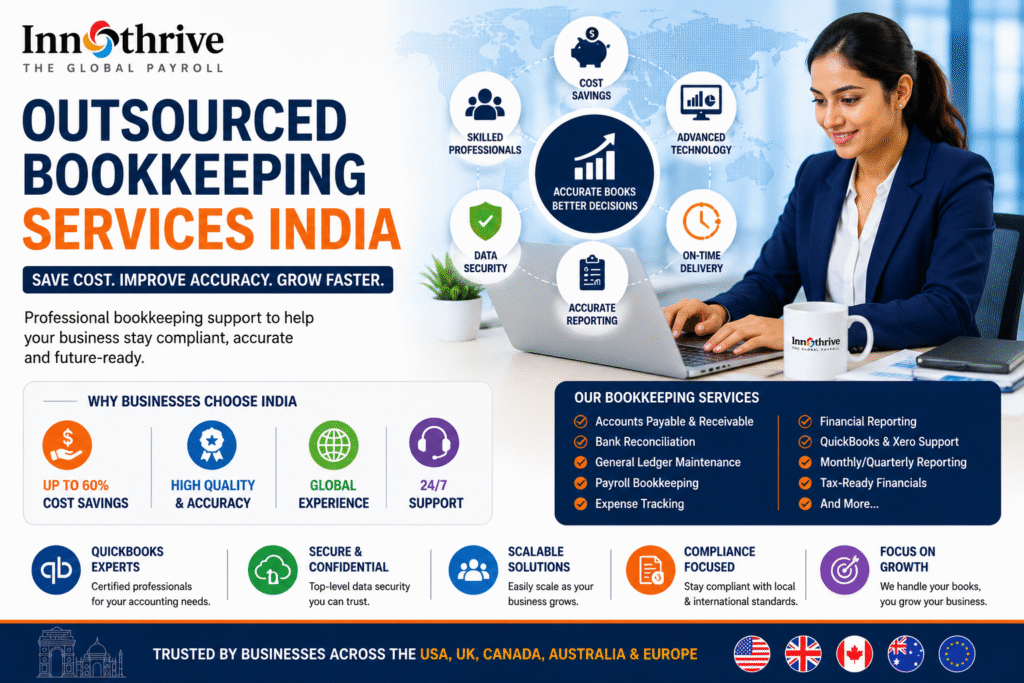
Why Professional Bookkeeping Outsourcing in India is the Smart Choice for Global Businesses Bookkeeping is an essential part of any business. Managing financial records, organizing daily financial transactions, maintaining and balancing ledgers, and other operations can be time-consuming and costly. Hence, companies from across the globe are seeking ways to minimize this burden and costs while improving efficiency and focusing on core business functions. They are now opting for outsourced bookkeeping services in India. Whether it’s start-ups, small or medium-sized companies, or large enterprises, everyone is outsourcing bookkeeping to maintain their workflow and increase accuracy. The Growing Trend of Bookkeeping Outsourcing Businesses are constantly looking for ways to improve efficiency and save money in today’s dynamic business world. That’s why outsourcing bookkeeping services in India has become one of the fastest-growing trends in recent years. What is Professional Outsourcing Bookkeeping? Outsourcing bookkeeping means assigning a company’s financial record-keeping tasks to a third-party service provider. These outsourced services include a range of financial management tasks like: Transaction Recording: Documenting every financial transaction of a business, including sales, purchases, receipts, and payments. Bank Reconciliation: Comparing a company’s cash book records with its bank statements to ensure that inconsistencies are identified and resolved quickly. Financial Reporting: Preparing key reports like balance sheets, income statements, and cash flow statements that offer insight into the company’s financial health. Tax Compliance and Filing: Ensuring that sales tax is correctly calculated, collected, and filed with the appropriate government authorities. Payroll Processing: Handling employee payroll and ensuring accurate wage calculations, tax deductions, and timely disbursement of salaries. Accounts Payable and Receivable: Managing and tracking payments to suppliers and ensuring timely collections from customers. Key Benefits of Outsourcing Bookkeeping to India The demand for skilled and experienced bookkeepers is higher than ever. Finding and retaining reliable and qualified staff for bookkeeping tasks—whether for SMEs or large enterprises—is difficult. That’s why outsourced bookkeeping services in India have become a strategic choice for businesses worldwide.Let’s explore the key benefits of professional bookkeeping outsourcing in India for global businesses. Cost Efficiency It is one of the most essential reasons to choose outsourced bookkeeping services in India. Lower labor costs without compromising quality. No stress of hiring, training, or purchasing software licenses. Pay only for the services you need, avoiding full-time salaries and benefits. Access to Skilled Professionals India has a large talent pool of accounting and finance experts. Professional bookkeeping outsourcing in India ensures that you have access to qualified professionals who are: Experienced in handling bookkeeping for various industries like retail, tech, e-commerce, and manufacturing. Skilled and trained in the latest accounting software and tools. Flexibility and Scalability Outsourcing services make it easier to scale up or down based on your business requirements.Benefits include: Easy adjustment of service levels based on transaction volumes or seasonal demands. Access to a wide range of services, from basic bookkeeping and payroll to advanced financial analysis and tax planning. Focus on Core Business Functions You save time by outsourcing bookkeeping, which allows you to focus on your core business activities like: Revenue-generating activities Business development Enhancing customer experience An outsourced bookkeeping expert can handle these tasks for you and allow you to focus on your core business operations and expand your market presence. Enhanced Data Security and Confidentiality Financial data is very sensitive. According to IBM, the average cost of a data breach in the financial sector was $6.04 million in 2024. To ensure security, offshore bookkeeping services in India for US firms like Innothrive Global Payroll follow strict data security protocols and guidelines. Professional bookkeeping outsourcing in India provides: Secured cloud-based systems to protect financial records. Compliance with international data protection standards like GDPR. Confidentiality agreements that ensure your business data remains private and secure. With trusted bookkeeping experts, businesses can gain peace of mind knowing their financial data is safe. What to Look for in a Professional Bookkeeping Outsourcing Partner in India India has become a global hub for outsourcing bookkeeping services. When considering outsourcing bookkeeping services in India for US firms, it is important to understand what makes a bookkeeping outsourcing partner truly capable of handling financial functions. Here’s what to look for while selecting the right outsourcing partner: Global Accounting Expertise When outsourcing your bookkeeping, it’s important to work with experts who have knowledge of both local and international accounting standards. Qualified Experts: Look for professionals who have certifications like CPA, CA, ACCA, or CMA, ensuring your bookkeeping is handled by highly trained professionals. International Standards Knowledge: Your partner should be well-versed in IFRS, GAAP, and other global accounting norms. Cross-Border Experience: They should expertly manage international financial regulations and ensure flawless operations. Customized Solutions: They must have experience across various industries to offer bookkeeping that’s customized for your business needs. Upgrade your financial workflows with expert outsourcing support. Call Now! Tax-Smart Bookkeeping Taxes are complex, particularly for businesses operating in multiple countries. A professional outsourcing partner will help you stay compliant while optimizing your tax position. Compliance Expertise: Experienced teams that can manage tax reporting for multiple countries, reducing the risk of errors or penalties. Tax Optimization: They help identify tax-saving opportunities to minimize liabilities legally. International Taxation Knowledge: They navigate global tax complexities efficiently, including GST, transfer pricing, and withholding tax. Proactive Accuracy: They ensure your books remain accurate and compliant by catching issues early and making audits and reporting flawless. Ultimate Finance Process Outsourcing Modern bookkeeping goes beyond recording transactions—it involves managing the entire financial workflow. You should get: Complete Services: Partners that can handle accounts payable, receivable, payroll, reconciliations, and financial reporting by covering all critical processes. Efficient Processes: Smooth workflows from transaction entry to final reporting to reduce errors, save time, and boost overall efficiency. Actionable Insights: Integrating financial analytics into bookkeeping helps you make informed business decisions. Chartered Accountants and Technology The combination of professional expertise and technology is a game-changer for global bookkeeping. Your bookkeeping service should include: Expert CA Guidance: Experienced Chartered Accountants offering strategic insights alongside daily bookkeeping. Advanced Software: Use

Professional bookkeeping outsourcing India Read More »

HR Statutory Compliance Services in India

HR Statutory Compliance Services in India: A Legal Imperative for Business Sustainability In today’s rapidly evolving regulatory ecosystem, organizations in India are increasingly exposed to statutory risks involving labour and employment laws. Ensuring HR legal compliance is no longer a matter of administrative convenience, it is a statutory obligation that directly impacts business continuity, workforce productivity, and organizational reputation. This landscape becomes even more critical for emerging businesses. HR compliance for startups often falls behind due to limited resources and evolving operational structures. However, the consequences of non-compliance, including heavy penalties, prosecution of directors, lawsuits, and business disruptions — necessitate a robust, well-structured compliance framework from day one. What is HR Statutory Compliance? HR statutory compliance services involve adhering to all applicable labour and employment laws enforced by Central and State authorities in India. These laws cover a wide spectrum of workforce-related regulations, including: Employee wages and compensation Social security and employee welfare contributions Workplace health, safety, and working conditions Industrial relations and dispute management Sexual harassment prevention and grievance redressal Mandatory registrations, approvals, and periodic returns As labour jurisprudence evolves, particularly with the rollout of the new Labour Codes, organizations must maintain continuous vigilance to align with every statutory update. Why HR Compliance Services in India Are Essential India has over 40+ central and 100+ state-specific labour laws, making compliance highly complex. Professional HR compliance services India enable businesses to achieve: Zero non-compliance penalties & litigation Strong corporate governance & sustainability Transparent employer-employee engagement Enhanced brand trust among stakeholders Smooth functioning during audits & inspections Failure to comply may lead to: Penalties, fines, interest, and prosecution Loss of licenses or industrial approvals Business operations suspension Employee disputes leading to judicial intervention For growing companies, particularly those attracting investment, compliance due diligence has become a critical evaluation parameter. Book your free HR compliance consultation today! Call Now! Key Elements Covered Under HR Legal Compliance Professional compliance service providers typically manage: Compliance Area Statutes Covered (Illustrative) Payroll Compliance Payment of Wages Act, Minimum Wages Act, Bonus Act Social Security Compliance EPF Act, ESI Act, Employee Compensation Act Industrial Relations ID Act, Standing Orders Act Shops & Establishment Compliance State-wise Shops & Establishments Acts Women & Child Protection Maternity Benefit Act, POSH Act Occupational Safety Factories Act, Labour Codes (OSHW Code) This ensures comprehensive monitoring, documentation, control, and tracking of all HR-linked legal obligations. HR Compliance for Startups: Building the Right Foundation Startups often focus heavily on innovation and scale, overlooking compliance. However, early adoption of statutory frameworks under HR compliance for startups avoids: Investor red flags during funding rounds Legacy compliance gaps that escalate over time Talent attrition due to unstructured HR governance Professionally managed compliance systems support: Seamless onboarding & payroll processes Statutory registrations from inception Policy drafting aligned with labour laws Legal preparedness for audits/VC due diligence Outsourcing HR Statutory Compliance Services: A Strategic Advantage Delegating compliance responsibilities to a qualified specialist ensures: Expert interpretation of laws and reforms Timely filings and renewals without oversight Digital documentation and audit readiness Reduced operational burden on HR teams This empowers organizations to remain legally compliant while focusing on core growth initiatives. ISPL — Your Trusted Partner for HR Statutory Compliance At ISPL, we specialize in delivering end-to-end HR statutory compliance services tailored to the evolving needs of businesses across India. Our team of labour law and compliance professionals ensures: Accurate statutory interpretation On-time filings and return submissions Comprehensive documentation and digital compliance tracking State and central labour law coverage across India Seamless handling of inspections and legal notices ISPL empowers employers, from early-stage ventures to global enterprises, to achieve compliance excellence, reduce legal exposure, and focus on strategic growth without operational disruptions. Why Choose ISPL? At ISPL, we deliver proactive and technology-enabled HR statutory compliance services with: Nationwide coverage — All States & UTs 100% timely statutory filings Digital compliance dashboards & trackers Dedicated legal and labour law experts Single point-of-contact support Our mission: Zero compliance risk. 100% business continuity. Partner with ISPL — Your Compliance Journey Starts Here Whether you are a global company entering India or a high-growth domestic business, ISPL ensures you stay fully compliant with all labour regulations so you can focus on what matters most: scaling your success.Stay compliant, stay ahead — connect with ISPL now. Call Now! FAQs What are HR statutory compliance services in India? HR statutory compliance services ensure that a company follows all applicable labour and employment laws in India — including payroll, social security, workplace safety, and employee welfare regulations — to remain legally compliant and audit-ready. Why is HR compliance important for businesses? HR compliance protects companies from penalties, lawsuits, and business disruptions. It builds a foundation of trust, ensures employee satisfaction, and promotes smooth business operations. How can startups manage HR statutory compliance effectively? Startups can manage compliance efficiently by partnering with professional HR compliance service providers like ISPL. This ensures timely registrations, accurate filings, and compliance from day one — avoiding future legal risks. Why should businesses outsource HR compliance services to ISPL? ISPL provides end-to-end HR statutory compliance services across India with expert legal support, digital tracking, and timely filings — helping businesses stay 100% compliant while focusing on growth.

HR Statutory Compliance Services in India Read More »

Top 10 Reasons to Use EOR Services in India

Top 10 Reasons to Use EOR Services in India for Your Global Business Businesses are scaling beyond borders but very few of them are prepared for what comes with it. Building an international team clash with a lot of complexities like management of transactions, navigating foreign labour laws, ensuring compliance, manage payroll across time zones and tax systems. That’s where EOR services in India makes a difference. Employer of Record (EOR) services lets you to hire anywhere internationally. In this blog you’ll going to explore about what is employer of record, and their benefits of EOR, when to choose EOR services, and how to select the right partner in employer of record, that empower businesses to scale better, reduce risk, and focus on what truly matters for people. What is an Employer of Record? If you want to expand your business operations in a foreign country, you have two options: set up a legal entity or use a global EOR. The cost to open a business entity in another country can be costly. And also it can also be time consuming to build in, as there’s a lot of paperwork involved. Using a global EOR is more cost-effective. An employer of record (EOR), also called global employment organization that allows companies to legally engage with employees across borders without setting up a local entity. different country. EOR company in India takes legal responsibility of all the HR-related tasks including hiring employees from different countries, on-boards, off-boards, pays, payrolls, tax administration, and employee benefits etc. ensuring compliance with local employment laws, allowing your teams to focus on core performances. What are the Responsibilities of EOR? An EOR company in India is responsible for managing HR-related tasks in a specific country, including handling payroll, taxes, and employee benefits, and ensuring the compliance with local labour laws.Key Responsibilities: Payroll and taxes: Processing payroll, holding the correct taxes, and managing all the tax filings and reporting. Benefits administration: Providing and managing the employee benefits to ensure they meet local legal requirements like health insurance, and other contributions. Legal and compliance: Ensuring full compliance with all the local labour laws, regulations, and employment standards, which includes managing the employment contracts, and handling the legal aspects of on-boarding and termination. HR administration: Handling everyday HR administrative tasks, like on-boarding new employees and processing their paperwork. Risk Reduction: Assuming the legal and financial liability for employment-related matters, helps the client company to avoid risks and penalties related with non-compliance in a foreign country. What are the benefits of using Employer of Record (EOR) services for Global Expansion Global expansion opens up exciting possibilities but it comes with a lot of challenges and complexities. Many organizations today depend on global employment solutions India to ease the journey and build a strong base for international growth. 1. Hire Without Setting up a Legal Entity Spreading into new markets often requires setting up a legal entity in India or in other country which is a time consuming and costly process. With an Employer of Record (EOR), businesses can avoid this requirement and hire a talent flawlessly. Quick market entry Hire employees from new countries quickly within days, not even months. Cost-effective Avoid costs related to company registration, local legal compliance, and administrative. Focus on growth Free your team from administrative burdens and let them focus on other business objectives. 2. 100% Legal and Regulatory Compliance Employer of records (EOR) ensures comprehensive compliance with all local labour laws, taxation, and employment regulations which is the most critical challenges when expanding globally.As each country have their local employment laws, taxes laws, and business regulations. A wrong action can lead to costly penalties.Partnering with EOR services in India ensures your business operates 100% legally and securely. The EOR company in India acts as the legal employer, manage contracts, statutory contributions, and compliance with labour laws. It ensures penalties, fines, and legal disputes caused by non-compliance. It maintains peace of mind while focusing on business growth. It flawlessly directs India’s complex regulatory environment with expert guidance. 3. Faster Market Entry Entering into a new market opens up many opportunities. As traditional expansion often requires registering a local entity, working through paper work, and understanding the complex employment regulations. All of which can take months or even years. By using EOR services in India, companies can escape these delays and start operations immediately. The EOR acts as the legal employer and takes care of all the local compliance, contracts, and statutory requirements. Immediate legal presence Start operations and hire employees in India without setting up a local entity, saving significant time and administrative effort. Market testing with minimal risk Set up projects or explore market demand before committing to long-term investments. Streamlined on-boarding EOR handles contracts, benefits, and payroll, by allowing employees to start contributing immediately. Faster response to opportunities Quickly adapt for market changes, customer demands, or business strategy pivots while the EOR manages the operational details. Expand globally without the hassle — Get Started with EOR Today! Call Now! 4. Simplified Payroll and Benefits Management Managing payroll and employee benefits across multiple countries can be an ominous task, especially dealing with different kind of tax codes, currencies, and social benefits. With an EOR, these challenges can be handled, ensuring flawless payroll and benefits administration worldwide. Automated Payroll EOR manage payroll for you, ensuring employees are being paid accurately and on-time across multiple regions. Complaint Benefits Administration EOR handles benefits packages like health insurance, retirement plans, and bonuses according to their local standards. Cost and Time Efficiency Outsourcing payroll management and benefits reduces the need for an in-house HR team dedicated to complex tasks in multiple countries. 5. Reduced Administrative Burden Global business operations leads to heavy administrative work burden. Whether it’s employee records management, paperwork, or compliance documentation that can quickly crash. EOR services handle these tasks efficiently and lightens the load of your in-house teams. Smooth Operations Employer of records (EOR) takes care of employment that contracts, taxes, and employee documentations,

Top 10 Reasons to Use EOR Services in India Read More »

India’s GST Overhaul: Simplified Structure, Consumer Relief & Sin Tax Surge

India’s GST Overhaul

India’s GST Overhaul: Simplified Structure, Consumer Relief & Sin‑Tax Surge 1. Executive Summary The GST Council has carried out the most significant indirect tax reform in nearly a decade. The previous four slab system (5%, 12%, 18%, 28%) has been rationalized into a cleaner structure: 5% “merit” rate – for everyday essentials 18% standard ratefor general goods and services 40% “demerit/sin” rate – for luxury, harmful, and sin goods Additionally, individual life and health insurance policies are now GST-exempt. This reform aims to simplify compliance, reduce prices for consumers, boost demand (especially ahead of festivals), and strategically discourage consumption of harmful goods. 2. Fiscal Impact & Implementation While the government anticipates a revenue loss of ₹48,000 crore overall, this is considered manageable relative to the broader economic benefits like demand stimulation and reduced inflation pressure (estimated up to 1.1 percentage points). Effective Date: September 22, 2025 (the first day of Navratri), except for some sin goods where the shift may follow later, based on compensation cess obligations. 3. Industry Wise Tax Impact Table Industry / Category Previous GST Rate(s) New GST Rate Impact Summary Daily essentials (soap, shampoo, toothpaste, hair oil, utensils, feeding bottles, diapers, namkeen, chocolates, noodles) 12–18% 5% Significant cost reduction increases affordability and demand. Food staples (UHT milk, paneer, Indian breads like roti/paratha) 5% or 12% Nil Lifeline relief for households. Healthcare & drugs (life‑saving medicines, medical devices, spectacles, diagnostics) 12–18% 5% or Nil Makes critical healthcare and equipment more accessible. Insurance (individual life & health) 18% Nil Major affordability gain and coverage expansion. Education materials (books, pencils, exercise notebooks, maps) 12% Nil Relief for educational spending. Agriculture & farming equipment (tractors, drip systems, seeds, handicrafts, renewable equipment) 12–18% 5% Boosts these sectors through reduced taxation. Construction & building (cement) 28% 18% Moderate tax relief for the sector. Automobile & auto parts (small cars ≤350 cc, bikes ≤350 cc, three-wheelers, buses, ambulances, small trucks, all auto parts) 28% 18% Reduced tax to boost automotive and accessory demand. Electronics & appliances (ACs, TVs >32”, dishwashers, monitors, projectors) 28% 18% Significant relief for consumers. Luxury / sin goods (pan masala, cigarettes, gutkha, chews, sugary & caffeinated drinks, luxury cars, motorcycles >350 cc, yachts, personal aircraft, gambling) 28% or with Compensation Cess 40% Disincentive pricing for harmful/luxury items; conversion to GST‑only base enhances tax simplicity. 4. Strategic Implications for Businesses Consumer goods companies (FMCG, dairy, toiletries) may experience volume growth due to lower GST. Automotive and appliance manufacturers could see demand stimulation ahead of Diwali. Healthcare providers, educators, and insurers gain through cost reductions and extended coverage. Luxury segments and sin goods producers will face reduced demand due to steep taxation. Agri equipment and rural-focused manufacturers may benefit from lower tax burden stimulating rural purchasing. 5. Communication Tips for Businesses Highlight cost savings in marketing (e.g., “Now just 5% GST on XYZ product”). Reassess pricing strategies immediately to remain competitive. Prepare for demand boost The festive period—optimize inventory and logistics. Luxury goods producers might consider premium positioning or repositioning due to reduced affordability. Agritech and green energy suppliers can push outreach emphasizing lower taxation. Conclusion The GST reform is a milestone—simplifying the tax structure, cutting costs for millions, and encouraging healthier consumption patterns while maintaining revenue balance. It’s a win for compliance, consumers, and businesses ready to realign with this new landscape.

India’s GST Overhaul Read More »

Why the Best Professional Employer Organisations Are Crucial for Your Global Workforce

In today’s hyper-connected global economy, expansion isn’t a luxury—it’s a necessity. Ambitious companies no longer confine themselves to borders. They move fast, hire faster, and scale operations across time zones. But this global ambition hits a wall when compliance, payroll intricacies, local labour laws, and legal liabilities start piling up. That’s where the right Professional Employer Organisation (PEO) becomes not just helpful, but mission-critical. Let’s be clear—not all PEOs are built equal. The Cost of Choosing the Wrong PEO The global employment landscape is a minefield. A poorly-structured employment model can expose your business to: A low-cost, cookie-cutter PEO solution might promise the moon—but they rarely deliver it when it matters. And when things go wrong in a foreign jurisdiction, you’ll wish you had partnered with a firm that understands the nuances of your industry, your business model, and your target geography. What the Best PEOs Actually Do Differently Top-tier PEOs don’t just “hire and pay” on your behalf. They operate like stealth HR-command centres, empowering you to: They act as Employer of Record (EOR) partners, enabling your global workforce to function like an extension of your home team—with zero compromise on legal, financial, or operational control. You Deserve a Partner Who Understands the Stakes A true PEO partner is not just a service provider. They are a strategic enabler. You don’t need a vendor who simply processes payroll—you need one who anticipates cross-border compliance risks, ensures flawless local onboarding, and navigates jurisdictional red tape like second nature. Many fast-growth companies working across the US, Europe, India, and APAC have already discovered the advantage of partnering with agile, execution-driven EOR providers that don’t hide behind generic service lines. These firms work quietly in the background, powering teams in over 40+ countries, often going unnoticed—and that’s exactly how it should be. Because in global business, silence is efficiency. In Closing If your global workforce is your competitive edge, then your PEO is the edge on that edge. Choose one that doesn’t just keep you compliant—but one that helps you win. When expansion can’t wait, compliance can’t fail, and excellence can’t be compromised—you’ll know exactly who to call.

Why the Best Professional Employer Organisations Are Crucial for Your Global Workforce Read More »

Holiday List of 2025 in India

Date Day Holiday 1st Jan Wednesday New Year’s Day 6th Jan Monday Guru Govind Singh Jayanti 14th Jan Tuesday Pongal, Makar Sankranti, Hazarat Ali’s Birthday 26th Jan Sunday Republic Day (Gazetted Holiday) 2nd Feb Sunday Vasant Panchami 12th Feb Wednesday Guru Ravidas Jayanti 19th Feb Wednesday Shivaji Jayanti 26th Feb Wednesday Maha Shivaratri 13th Mar Thursday Holika Dahana 14th Mar Friday Holi, Dolyatra (Gazetted) 28th Mar Friday Jamat Ul-Vida 30th Mar Sunday Chaitra Sukhladi, Ugadi, Gudi Padwa 31st Mar Monday Ramzan Id/Eid-ul-Fitr 6th Apr Sunday Rama Navami 10th Apr Thursday Mahavir Jayanti 18th Apr Friday Good Friday 12th May Monday Buddha Purnima/Vesak 7th Jun Saturday Bakrid/Eid ul-Adha 6th Jul Sunday Muharram/Ashura 9th Aug Saturday Raksha Bandhan (Rakhi) 15th Aug Friday Independence Day, Janmashtami (Smarta), Parsi New Year (Gazetted Holiday) 16th Aug Saturday Janmashtami 27th Aug Wednesday Ganesh Chaturthi/Vinayaka Chaturthi 5th Sep Friday Milad un-Nabi/Id-e-Milad, Onam 29th Sep Monday Maha Saptami 30th Sep Tuesday Maha Ashtami 1st Oct Wednesday Maha Navami 2nd Oct Thursday Mahatma Gandhi Jayanti, Dussehra (Gazetted Holidays) 7th Oct Tuesday Maharishi Valmiki Jayanti 10th Oct Friday Karaka Chaturthi (Karva Chauth) 20th Oct Monday Naraka Chaturdasi, Diwali/Deepavali 22nd Oct Wednesday Govardhan Puja 23rd Oct Thursday Bhai Duj 5th Nov Wednesday Guru Nanak Jayanti 24th Nov Monday Guru Tegh Bahadur’s Martyrdom Day 24th Dec Wednesday Christmas Eve 25th Dec Thursday Christmas

Holiday List of 2025 in India Read More »

Navigating Leave and Holiday Policies in Delhi, India

As #Multinationalcompanies (#MNC) increasingly rely on #EmployerofRecord (#EOR) solutions to streamline international workforce expansion, compliance with localized labor statutes becomes a strategic necessity. India’s regulatory framework, particularly in cities like #Delhi, includes distinct rules regarding employee leave and holiday entitlements. For EORs managing employment responsibilities on behalf of MNCs, it is crucial to align with local legal standards to ensure smooth operations and risk mitigation. 1. Statutory Leave Entitlements Under Indian Labor Law #Indianlaborlaw prescribes several categories of leave, with specifics often varying by state. In Delhi, these are primarily governed by the Delhi Shops and Establishments Act, in addition to applicable central legislation. EOR providers must incorporate these standards into their employment policies to ensure lawful engagement. a. #EarnedLeave (EL) / #PrivilegedLeave (PL) Employees earn this leave based on their duration of service—commonly accruing at a rate between 1.25 and 1.75 days per month. In Delhi, workers are entitled to a minimum of 15 days of earned leave per year. Unused days can typically be carried over (up to a limit of 45 days) and may be paid out upon termination, depending on company policy. b. Casual Leave (CL) Casual Leave is intended for short and unplanned personal matters. Most organizations in Delhi offer between 7 to 12 days of this leave annually. These days are not carried forward to the next year and are non-encashable. c. Sick Leave (SL) Under Delhi’s employment rules, workers are entitled to 12 days of paid sick leave annually. Employers may request a medical certificate for absences that extend beyond a couple of consecutive days. d. Maternity Leave The #MaternityBenefit (Amendment) Act, 2017 grants 26 weeks of paid maternity leave to eligible female employees for their first two deliveries. For subsequent births, the entitlement is 12 weeks. Provisions also exist for paid leave in case of miscarriage (6 weeks) and for adopting mothers (12 weeks under certain conditions). EORs are responsible for ensuring these benefits are provided in accordance with applicable laws. e. Paternity Leave While there is no statutory #paternityleave in India, many employers in Delhi voluntarily offer 5 to 15 days of paid leave to new fathers. EORs can support clients in implementing such benefits as part of inclusive HR practices. f. #SpecialLeave Categories Some companies may offer discretionary leave such as for marriage, bereavement, or education. These are usually governed by internal HR policies or individual employment contracts. 2. Public Holiday Structure in Delhi Delhi observes a mix of national, gazetted, and religious holidays throughout the year. Employers in India offer 10 to 14 public holidays depending upon the policies and religious observances and are expected to publish an annual list of recognized holidays. Key statutory holidays include: Organizations may offer #substituteholidays in #india to accommodate religious and cultural diversity, reinforcing their commitment to workforce inclusion.

Navigating Leave and Holiday Policies in Delhi, India Read More »