






HR Compliance Services India: Complete Guide for Businesses (2026)
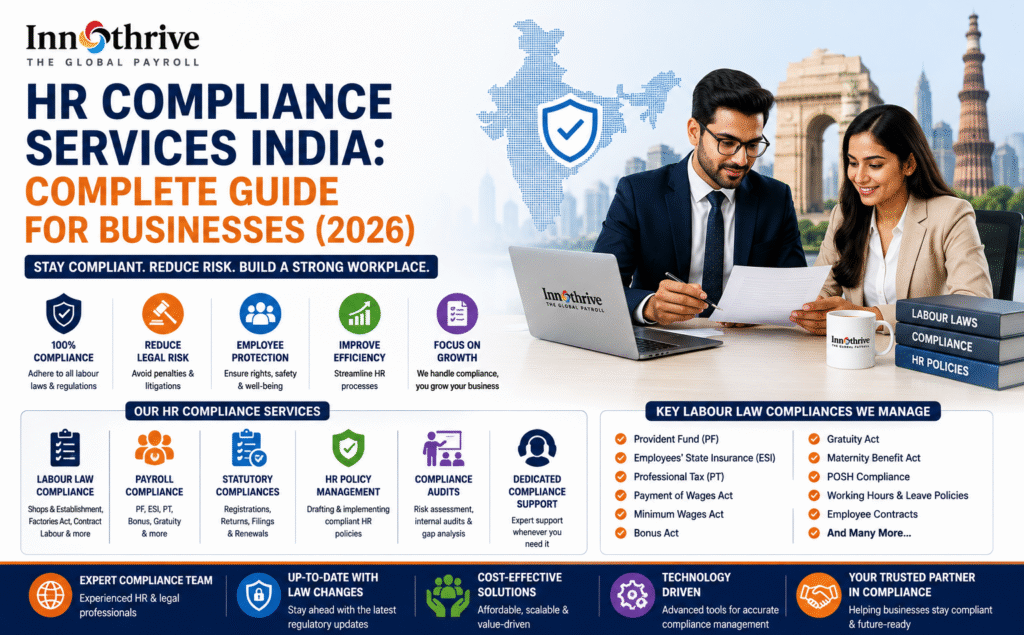
Managing employees in India involves much more than hiring and payroll. Every organization must comply with various labour laws, employment regulations, statutory requirements, and government reporting obligations. Failure to comply can result in penalties, employee disputes, legal notices, and reputational damage. As businesses expand across multiple states and hire larger workforces, managing HR compliance internally becomes increasingly complex. This is why many organizations are choosing HR compliance services in India to simplify compliance management and reduce legal risks. In this guide, we’ll explain what HR compliance is, why it matters, key legal requirements, and how professional HR compliance services help businesses remain fully compliant. What are HR Compliance Services? HR compliance services help businesses ensure that all employment practices comply with applicable labour laws, statutory regulations, and government requirements. These services cover every stage of the employee lifecycle, including recruitment, onboarding, payroll compliance, statutory filings, employee benefits, leave management, workplace policies, and employee exits. Professional HR compliance providers ensure businesses follow regulations issued by: Ministry of Labour & Employment Employees’ Provident Fund Organisation (EPFO) Employees’ State Insurance Corporation (ESIC) Income Tax Department State Labour Departments Professional Tax Authorities Why HR Compliance is Important in India India has one of the world’s most comprehensive employment law frameworks. Employers must comply with multiple central and state regulations that vary depending on industry, employee strength, and business location. Non-compliance may lead to: Financial penalties Labour inspections Legal disputes Employee grievances Delayed statutory approvals Business reputation risks Proper HR compliance protects both employers and employees while creating a transparent and legally compliant workplace. Key Areas Covered Under HR Compliance Services Employee Onboarding Compliance Every new employee should be onboarded with legally compliant documentation. This includes: Employment contracts Offer letters Identity verification Statutory declarations Background verification Employee policy acceptance Payroll Compliance Payroll compliance involves ensuring employees are paid accurately while meeting all statutory obligations. Services include: Salary processing TDS deductions Payslip generation Bonus calculations Full & Final Settlement Payroll reporting Provident Fund (PF) Compliance Organizations meeting applicable thresholds must register with EPFO and ensure timely: PF registration Monthly PF contributions Electronic filings UAN management Employee State Insurance (ESI) Eligible employers must comply with ESI regulations by: Employee registration Monthly ESI contributions Statutory filings Employee benefit administration Labour Law Compliance Businesses must comply with several labour laws, including: Shops & Establishments Act Minimum Wages Act Payment of Wages Act Payment of Bonus Act Payment of Gratuity Act Equal Remuneration provisions Occupational safety regulations Leave & Attendance Compliance Proper leave management helps organizations comply with applicable employment laws. Compliance includes: Earned Leave Casual Leave Sick Leave Maternity Benefits Attendance records Holiday calendars Employee Exit Compliance When employees leave an organization, employers must ensure: Full & Final Settlement Experience letters Relieving letters Gratuity processing Statutory record updates Benefits of Outsourcing HR Compliance Services in India Reduced Compliance Risk Professional compliance experts continuously monitor regulatory updates to reduce legal risks. Better HR Efficiency HR teams spend less time managing documentation and statutory filings, allowing them to focus on strategic initiatives. Accurate Payroll & Compliance Integrated payroll and compliance management minimizes errors in salary processing and statutory deductions. Expert Labour Law Guidance Businesses receive professional advice on changing employment regulations and compliance requirements. Cost Savings Outsourcing eliminates the need for maintaining large internal compliance teams while providing access to experienced professionals. Who Needs HR Compliance Services? Professional HR compliance services benefit: Startups SMEs Multinational Corporations IT Companies Manufacturing Businesses Healthcare Organizations Retail Companies Educational Institutions Logistics Companies Professional Service Firms Whether you employ 10 or 10,000 people, HR compliance is critical for sustainable business growth. Why Choose The Global Payroll for HR Compliance Services in India? The Global Payroll provides end-to-end HR compliance solutions designed for Indian businesses and international organizations hiring employees in India. Our HR compliance services include: Employee onboarding compliance Employment documentation Payroll compliance PF & ESI management Labour law compliance HR policy advisory Leave & attendance compliance Statutory reporting Employee benefits administration HR compliance audits With our experienced HR professionals and compliance specialists, businesses can confidently manage their workforce while remaining compliant with Indian labour regulations. Industries We Serve Our HR compliance solutions support businesses across various sectors, including: Information Technology Manufacturing Healthcare Financial Services Retail & E-commerce Logistics Consulting Education Hospitality Professional Services Future of HR Compliance in India HR compliance is becoming increasingly technology-driven. Businesses are adopting digital HR systems, cloud payroll platforms, automated compliance tracking, and AI-powered workforce management to improve efficiency. Future trends include: Automated statutory compliance Digital employee documentation AI-driven payroll compliance Integrated HRMS platforms Real-time compliance monitoring Electronic labour records Organizations investing in proactive HR compliance today will be better prepared for future regulatory changes. Conclusion Managing HR compliance in India requires continuous attention to labour laws, statutory obligations, payroll regulations, and employee documentation. As businesses grow, maintaining compliance internally becomes increasingly challenging. Professional HR compliance services in India help organizations reduce legal risks, improve operational efficiency, ensure accurate payroll, and maintain complete compliance with employment regulations. Partnering with an experienced HR compliance provider allows businesses to focus on growth while leaving complex compliance responsibilities to experts. Frequently Asked Questions What are HR compliance services? HR compliance services help businesses comply with labour laws, statutory regulations, payroll requirements, employee documentation, and government reporting obligations. Why are HR compliance services important in India? HR compliance services help organizations avoid penalties, maintain legal compliance, improve employee trust, and manage workforce regulations efficiently. What does HR compliance include? HR compliance includes employment contracts, payroll compliance, PF, ESI, labour law compliance, leave management, statutory filings, employee benefits, and exit management. Can startups outsource HR compliance? Yes. Startups frequently outsource HR compliance to reduce costs, improve compliance accuracy, and focus on business growth. Why choose The Global Payroll for HR compliance? The Global Payroll provides comprehensive HR compliance, payroll processing, statutory compliance, labour law advisory, and workforce management services tailored to businesses of all sizes.
HR Compliance Services India: Complete Guide for Businesses (2026) Read More »