







Employer of Record in Delhi: Complete Guide for Global Companies Hiring in India
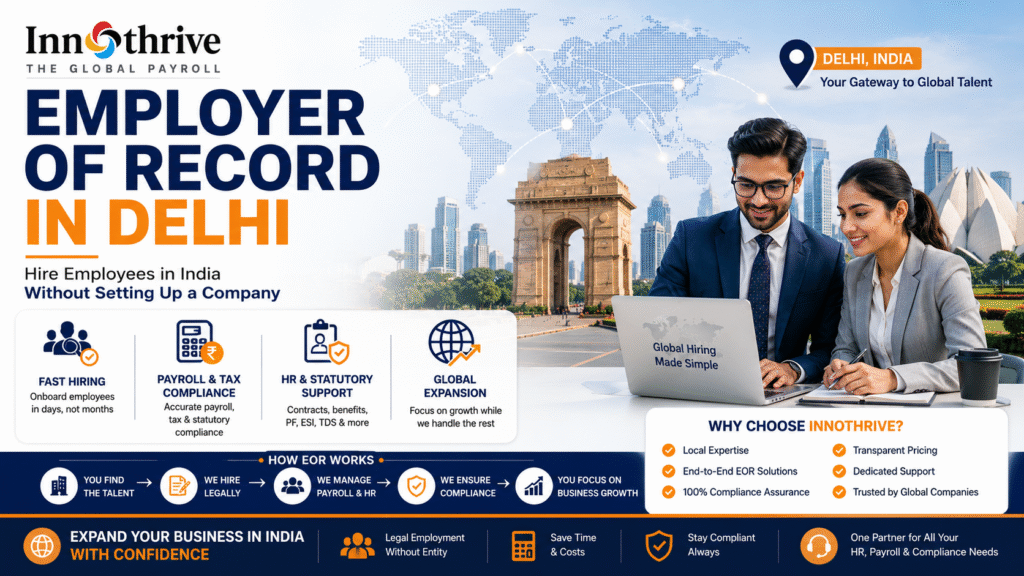
Employer of Record in Delhi: Complete Guide for Global Companies Hiring in India Delhi has emerged as one of India’s leading business destinations, attracting multinational corporations, startups, IT companies, consulting firms, manufacturing businesses, and global enterprises looking to establish operations in the country. With access to a large talent pool, world-class infrastructure, and proximity to the National Capital Region (NCR), Delhi offers immense opportunities for international expansion. However, hiring employees in India requires businesses to comply with complex labour laws, payroll regulations, tax requirements, and statutory obligations. For foreign companies that want to hire quickly without establishing a legal entity, an Employer of Record (EOR) in Delhi provides the ideal solution. This guide explains how EOR services work, their benefits, legal considerations, costs, and why businesses worldwide are choosing Employer of Record providers in Delhi. What is an Employer of Record (EOR)? An Employer of Record (EOR) is a third-party organization that legally employs workers on behalf of another company. While your business manages the employee’s day-to-day work, the EOR becomes the legal employer and handles all employment-related responsibilities. These include: Employment contracts Payroll processing Income tax deductions (TDS) Provident Fund (PF) Employee State Insurance (ESI) Professional Tax (where applicable) Labour law compliance Employee benefits Exit management This enables businesses to hire employees in Delhi without incorporating a local company. Why Global Companies Choose Delhi Delhi is one of India’s largest commercial hubs. Businesses prefer Delhi because of: Access to highly skilled professionals Strong IT and technology ecosystem Government institutions Corporate headquarters Excellent connectivity International airport Large startup ecosystem Proximity to Gurgaon and Noida Many international organizations establish their first Indian workforce in Delhi NCR. Why Use an Employer of Record in Delhi? Setting up a legal entity in India involves: Company registration GST registration PAN & TAN Payroll setup Labour law registrations Annual compliance Accounting requirements For businesses hiring only a few employees, this process can be expensive and time-consuming. An Employer of Record simplifies market entry by allowing businesses to begin hiring immediately. Benefits of Employer of Record Services in Delhi 1. Hire Without Setting Up a Company An EOR enables businesses to legally hire employees in Delhi without incorporating a local entity. This significantly reduces market-entry time. 2. Faster Hiring Instead of waiting weeks for entity registration, companies can onboard employees within days. This helps businesses respond quickly to new projects and market opportunities. 3. Complete Payroll Management An Employer of Record manages: Monthly payroll Salary processing Payslips TDS deductions Bonus processing Reimbursements Full & Final Settlement This ensures employees are paid accurately and on time. 4. Labour Law Compliance Indian employment regulations continue to evolve. An experienced EOR ensures compliance with: Labour laws Shops & Establishments Act Provident Fund ESI Gratuity Minimum wage regulations Leave policies 5. Reduced Compliance Risk Incorrect payroll or statutory filings may result in: Government penalties Employee disputes Legal notices Tax complications An EOR minimizes these risks through professional compliance management. 6. Better Employee Experience Professional onboarding, accurate payroll, employee benefits, and timely HR support improve employee satisfaction and retention. Services Offered by an Employer of Record A professional EOR in Delhi generally provides: Employee onboarding Employment agreements Payroll processing Tax deductions HR administration Leave management Attendance management Benefits administration Compliance reporting Exit formalities Many providers also offer recruitment and HR consulting. Industries That Benefit from EOR Services Employer of Record services are suitable for: IT Companies SaaS Businesses Manufacturing Healthcare Financial Services Engineering Retail Consulting Firms Logistics Professional Services Employer of Record vs Company Registration Employer of Record Company Registration No legal entity required Separate legal entity required Fast employee onboarding Longer setup process Lower initial investment Higher registration and compliance costs Payroll managed by EOR Business manages payroll Compliance handled by EOR Business responsible for compliance Ideal for testing the market Best for long-term expansion How Much Does Employer of Record Cost? Pricing depends on: Number of employees Salary structure HR support required Employee benefits Payroll complexity Most providers offer flexible pricing based on business requirements. Why Choose Innothrive? Innothrive provides comprehensive Employer of Record services in Delhi for global businesses looking to hire and expand in India. Our solutions include: Employer of Record (EOR) Payroll Processing HR Compliance Employment Contracts Employee Onboarding Tax Compliance Payroll Outsourcing HRMS Solutions Recruitment Support Accounting & Bookkeeping Our experienced HR, payroll, and compliance professionals help businesses hire confidently while remaining fully compliant with Indian regulations. Why Businesses Trust Innothrive End-to-End EOR Services Payroll & Compliance Experts Fast Employee Onboarding Dedicated HR Support Transparent Pricing Local Compliance Expertise Secure HR Technology Global Workforce Experience Whether you’re hiring one employee or building an entire team in Delhi, Innothrive helps you expand quickly and compliantly. Conclusion Hiring employees in India does not always require establishing a local legal entity. An experienced Employer of Record in Delhi enables businesses to hire talent quickly, simplify payroll, maintain compliance, and reduce operational complexity. For international companies entering the Indian market, EOR services offer a faster, more cost-effective, and lower-risk alternative to traditional company incorporation. Partnering with Innothrive gives you access to local expertise, compliant employment solutions, and end-to-end workforce management so you can focus on growing your business. Frequently Asked Questions What is an Employer of Record in Delhi? An Employer of Record (EOR) legally employs workers on behalf of another company while managing payroll, statutory compliance, tax deductions, and HR administration. Can foreign companies hire employees in Delhi without registering a company? Yes. Foreign companies can hire employees through an Employer of Record without establishing a legal entity in India. Is using an Employer of Record legal in India? Yes. Employer of Record services are legal when provided in compliance with Indian labour laws and statutory regulations. How long does employee onboarding take? Most EOR providers can complete onboarding within a few business days, depending on documentation and compliance requirements. Why choose Innothrive for EOR services in Delhi? Innothrive offers end-to-end Employer of Record services, payroll processing, HR compliance, tax support, and workforce management to help global
Employer of Record in Delhi: Complete Guide for Global Companies Hiring in India Read More »