






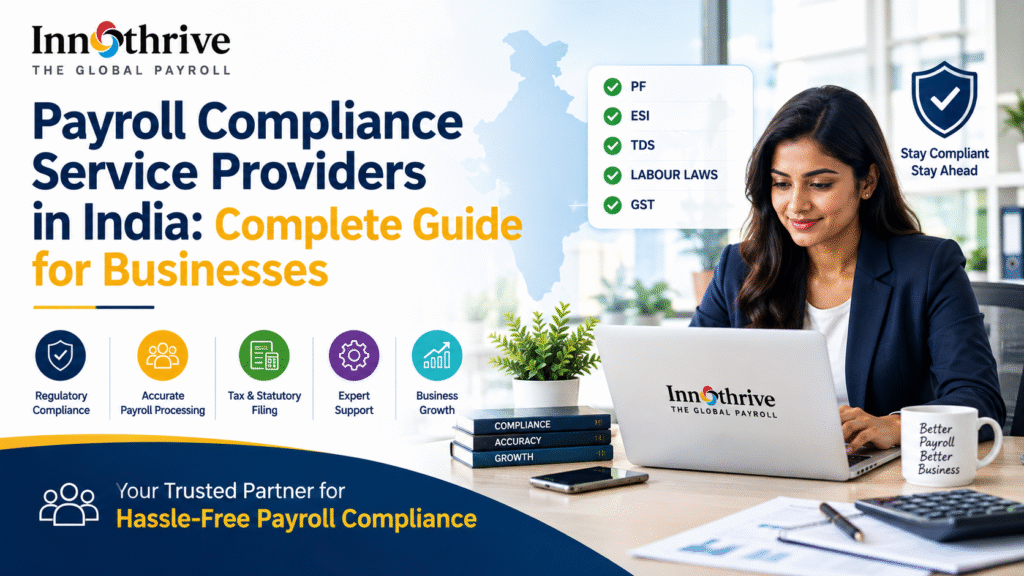
Managing payroll in India involves much more than calculating employee salaries. Businesses must comply with multiple labour laws, statutory deductions, tax regulations, filing requirements, and state-specific rules. Even a small payroll compliance error can result in penalties, employee dissatisfaction, or unnecessary administrative work.
This is why many companies work with professional payroll compliance service providers in India to manage payroll processing and statutory compliance accurately and efficiently.
Whether you operate a startup, SME, multinational company, or growing Indian business, outsourcing payroll compliance can help reduce risks while allowing your HR team to focus on strategic activities.
What Are Payroll Compliance Services?
Payroll compliance services help businesses manage the statutory and regulatory requirements associated with employee payroll.
A professional payroll compliance provider typically helps with:
- Salary and payroll processing
- Provident Fund (PF) compliance
- Employee State Insurance (ESI) compliance
- Professional Tax (PT)
- Tax Deducted at Source (TDS)
- Labour welfare requirements
- Statutory payroll calculations
- Payroll-related registrations
- Statutory returns and filings
- Employee payroll documentation
- Payroll records and reports
- Compliance updates and regulatory support
The exact requirements depend on factors such as the company’s location, employee strength, industry, salary structure, and applicable state regulations.
Why Businesses Need Payroll Compliance Service Providers in India
India has a complex payroll environment where businesses may need to comply with central and state-level requirements.
Managing these obligations manually can become challenging as an organization grows. A professional payroll compliance service provider can help businesses establish standardized processes and reduce the possibility of missed deadlines or incorrect calculations.
1. Reduce Payroll Compliance Risks
Payroll mistakes can create financial and administrative problems. Professional payroll providers use established processes and compliance checks to help reduce errors.
2. Stay Updated With Regulatory Changes
Payroll regulations and statutory requirements can change. Outsourcing payroll compliance gives businesses access to professionals who monitor applicable regulatory developments.
3. Improve Payroll Accuracy
Payroll providers can manage salary calculations, deductions, statutory contributions, tax calculations, and payroll reports using structured processes and technology.
4. Save HR Time
Payroll administration can consume significant HR resources. Outsourcing routine payroll activities allows internal HR teams to focus more on recruitment, employee engagement, performance management, and workforce planning.
5. Support Business Expansion
When companies expand into new states or increase their employee count, payroll compliance becomes more complicated. A payroll compliance partner can help businesses manage these requirements as they scale.
What Do Payroll Compliance Service Providers in India Handle?
A comprehensive payroll compliance solution can cover several areas of statutory payroll management.
Provident Fund (PF) Compliance
Eligible employers and employees may be required to make contributions under India’s provident fund framework. Payroll service providers can help calculate applicable contributions, maintain payroll records, and support statutory processes.
Employee State Insurance (ESI)
For eligible employees and establishments, ESI-related calculations, contributions, records, and compliance activities need to be managed appropriately.
Professional Tax
Professional Tax requirements vary by state. Payroll compliance providers can help businesses manage applicable deductions and state-specific compliance requirements.
TDS on Salary
Salary-related TDS calculations and compliance require accurate employee tax information and payroll records. Payroll providers can support calculations, deductions, documentation, and applicable filings.
Labour Law Compliance
Depending on the business, location, and workforce, several labour-related requirements may apply. Professional payroll compliance providers help organizations identify and manage applicable obligations.
Statutory Returns and Records
Payroll compliance involves maintaining appropriate records and completing applicable statutory filings within prescribed timelines.
Benefits of Outsourcing Payroll Compliance in India
Choosing payroll compliance outsourcing can provide several operational benefits.
Cost efficiency: Businesses can reduce the need to maintain a large internal payroll administration function.
Expert support: Payroll specialists can manage complex statutory requirements and payroll processes.
Data security: Established payroll providers generally use controlled systems and processes for handling sensitive employee payroll information.
Scalability: Outsourced payroll services can support businesses as employee numbers and locations increase.
Better reporting: Professional payroll systems can provide structured payroll reports and compliance records.
Reduced administrative workload: HR and finance teams spend less time on repetitive payroll activities.
How to Choose the Best Payroll Compliance Service Provider in India
Businesses should evaluate several factors before selecting a payroll partner.
1. Payroll and Compliance Expertise
Choose a provider with experience handling Indian payroll regulations and statutory requirements across relevant states.
2. Technology and Payroll Software
Check whether the provider uses reliable payroll technology for salary processing, employee data management, compliance calculations, reporting, and document management.
3. Data Security
Payroll contains sensitive employee information. Ask about access controls, data protection practices, backups, and security procedures.
4. Multi-State Payroll Capability
If your organization operates across different Indian states, select a provider capable of handling state-specific payroll and compliance requirements.
5. Support and Responsiveness
Payroll issues often have strict deadlines. A reliable service provider should offer responsive support for HR, finance, and employee queries.
6. Reporting and Documentation
Ensure the provider can provide payroll registers, statutory reports, employee payslips, compliance records, and other relevant documentation.
7. Ability to Scale
The right provider should be able to support your organization as you hire more employees, expand into new locations, or change your payroll structure.
Payroll Compliance Outsourcing vs In-House Payroll
Businesses often have to decide whether payroll should be managed internally or outsourced.
| Factor | In-House Payroll | Outsourced Payroll |
| Payroll administration | Internal team | External payroll specialists |
| Compliance monitoring | Internal responsibility | Supported by provider |
| Technology investment | Company managed | Usually provided by service partner |
| Scalability | May require additional staff | Easier to scale |
| HR workload | Higher | Lower |
| Compliance expertise | Depends on internal team | Specialist support available |
| Administrative cost | Can increase with growth | Potentially more predictable |
For businesses with complex payroll requirements or limited internal resources, outsourcing can be a practical option.
Who Should Use Payroll Compliance Services in India?
Payroll compliance services can be useful for:
- Startups hiring their first employees
- Small and medium-sized businesses
- Indian companies with large workforces
- Companies operating across multiple states
- Multinational companies with Indian employees
- Businesses expanding their operations in India
- Companies establishing an Indian subsidiary
- Organizations that want to outsource payroll administration
- Companies looking for professional statutory compliance support
Payroll Compliance for Foreign Companies Hiring Employees in India
Foreign companies entering India may face additional challenges when establishing payroll operations.
They may need support with:
- Indian payroll processing
- Employee salary structures
- Statutory deductions
- TDS on salary
- PF and ESI applicability
- State-specific requirements
- Payroll documentation
- Employment-related compliance
- Payroll reporting
Working with an experienced payroll compliance provider can simplify the process and help foreign businesses establish a structured payroll operation in India.
Payroll Compliance Service Providers India: Why Partner With a Specialist?
The right payroll partner should do more than simply calculate salaries. A comprehensive provider should combine payroll processing, statutory compliance, technology, reporting, and ongoing support.
At The Global Payroll, businesses can access payroll and HR-related solutions designed to simplify workforce administration and support companies managing employees in India and international markets.
Our payroll solutions can help businesses streamline payroll processing, statutory compliance, employee administration, and related payroll activities through a structured and technology-driven approach.
Frequently Asked Questions
What is a payroll compliance service provider in India?
A payroll compliance service provider helps businesses manage payroll-related statutory requirements, deductions, calculations, records, filings, and compliance processes applicable to their employees and business operations.
What statutory compliances are included in Indian payroll?
Depending on the organization and applicable laws, payroll compliance may include PF, ESI, Professional Tax, TDS, labour-related requirements, statutory records, and applicable returns or filings.
Why should I outsource payroll compliance in India?
Payroll compliance outsourcing can help businesses reduce administrative workload, improve payroll processes, access specialist expertise, and reduce the risk of missed compliance requirements.
How much does payroll compliance outsourcing cost in India?
The cost depends on factors such as employee count, payroll complexity, number of locations, services required, technology, and the scope of compliance support. Businesses should request a customized quotation based on their requirements.
Can payroll providers handle multi-state payroll in India?
Yes. Many professional payroll providers support organizations operating across multiple Indian states. However, businesses should confirm the provider’s experience with the specific states and compliance requirements relevant to their operations.
Can foreign companies outsource payroll in India?
Yes. Foreign companies with employees in India can work with payroll service providers to manage Indian payroll processing and applicable statutory requirements.
What should I look for in a payroll compliance company?
Consider the provider’s Indian payroll expertise, statutory compliance capabilities, technology, data security, multi-state experience, customer support, reporting capabilities, and scalability.
Conclusion
Payroll compliance is an important part of running a compliant and efficient business in India. As payroll regulations and workforce requirements become increasingly complex, managing everything internally can place additional pressure on HR and finance teams.
Working with experienced payroll compliance service providers in India can help businesses streamline payroll administration, manage statutory requirements, improve accuracy, and support business growth.
If your company is looking for payroll compliance services in India, evaluate providers based on their compliance expertise, technology, security, reporting, support, and ability to manage your specific workforce requirements.